Malcolm X
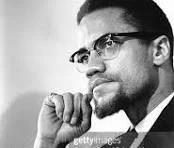
The name Malcolm X is probably familiar to a fair few. His name is synonymous with the African American plight. During the '50s and '60s, he came to prominence in America through his passionate speeches and direct action. In many ways, he was the dialectical opposite of Martin Luther King—a contemporary of his who is also a character in my book. While King believed in non-violence, racial integration, and Christianity, Malcolm X believed in the contrary: self-defense, black separatism, and Islam. That said, his views softened somewhat toward King and his methods in his later years.
I first meet him at a reggae bar in the Philippines, along with King and W.E.B. Du Bois, a black existentialist writer from the late 19th/early 20th century. We watch footage of the Black Lives Matter rallies together. The next time I see him, he is on an episode of Big Brother, discussing whose turn it is to do the laundry with Cecil Rhodes and Clive of India, two prominent figures from Britain’s colonial past.